1947 to 1949
The Nakba.
An example. Type anything above.
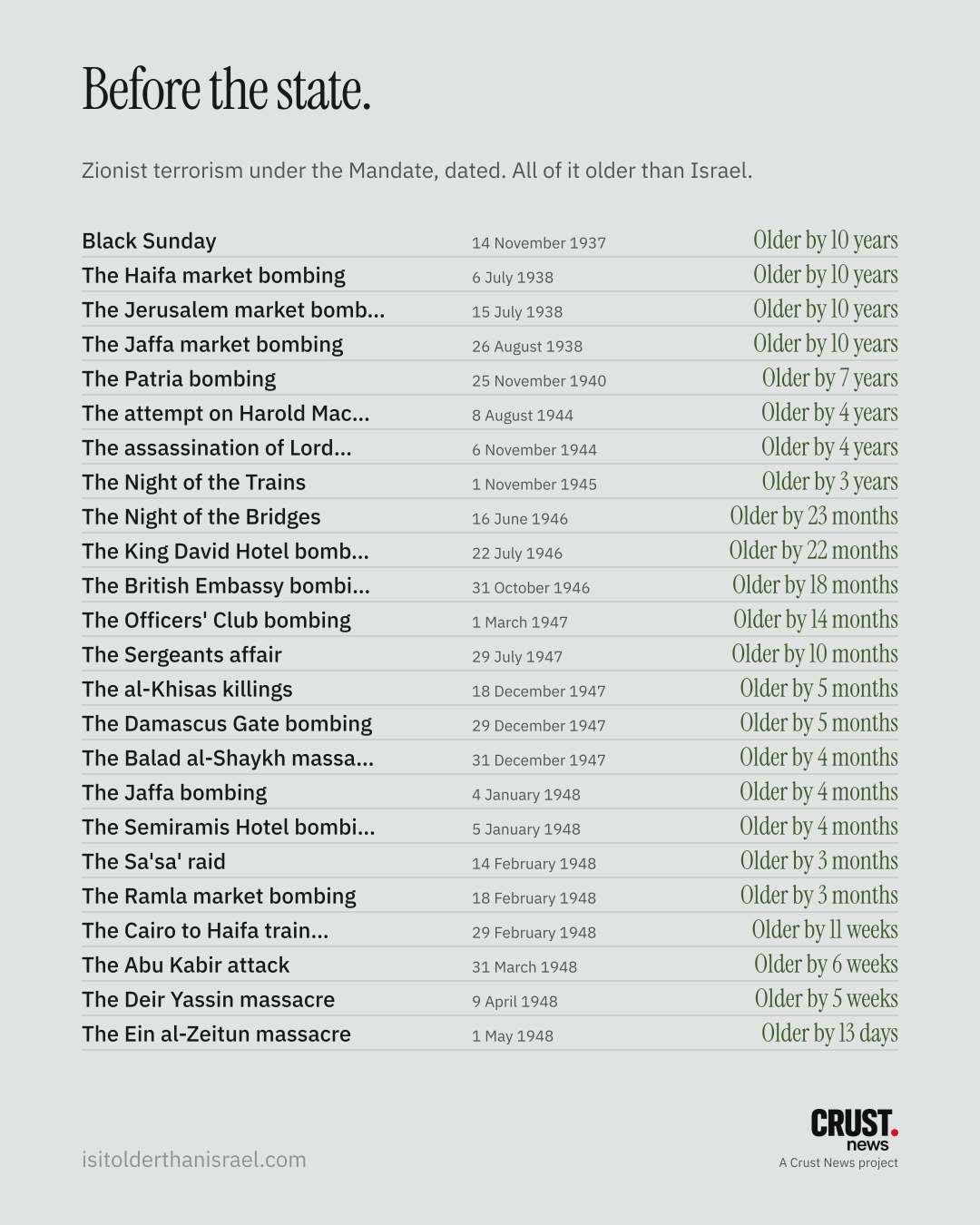
Displacement began with the fighting that followed the partition vote of 29 November 1947.
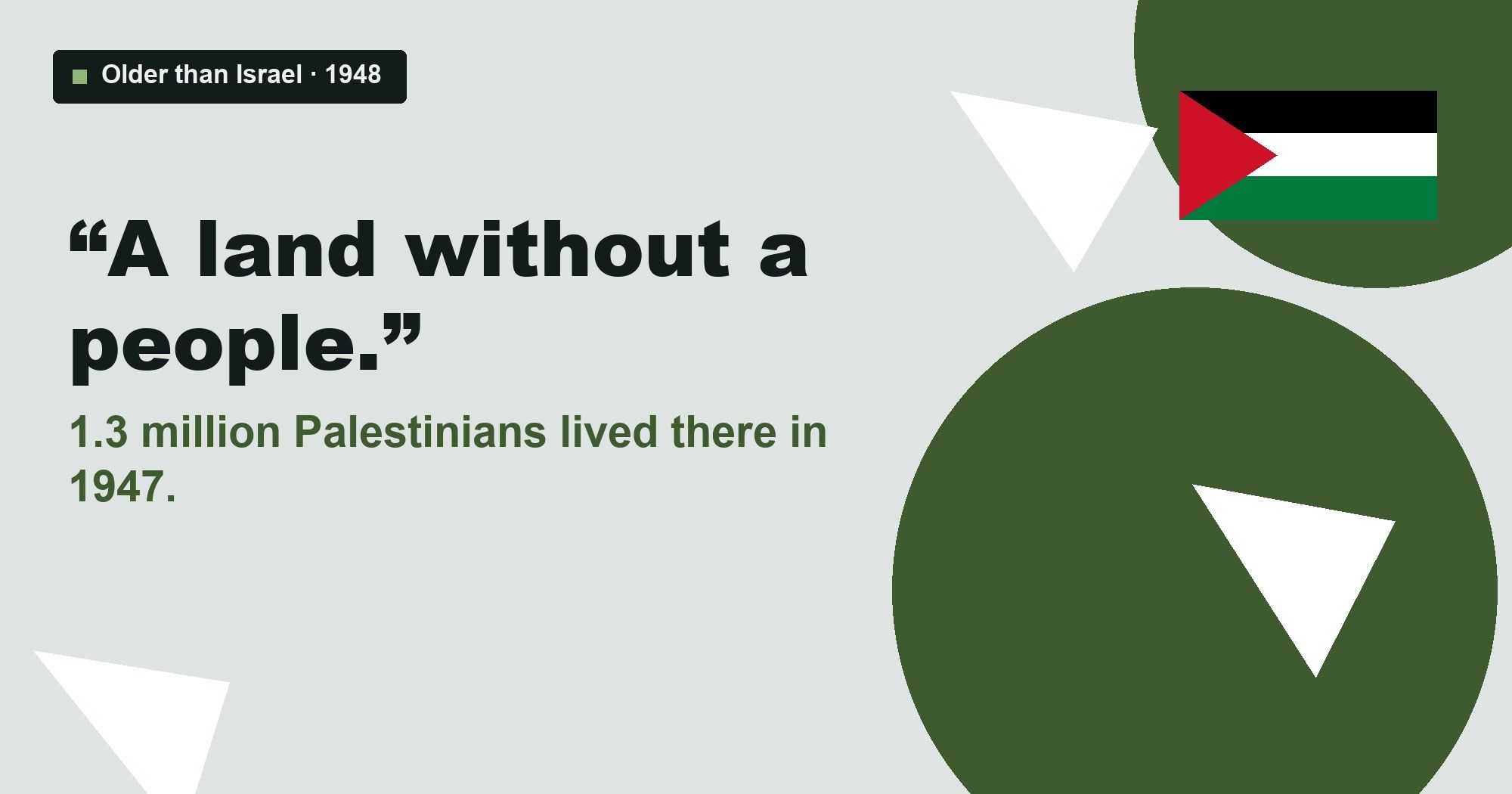
The Nakba, the catastrophe, is the name Palestinians give to the destruction of their society between the partition vote of 29 November 1947 and the armistices of 1949. In that time about 750,000 people, more than half the Arab population of Palestine, were driven from or fled their homes, and 418 villages by Walid Khalidi's count were emptied and mostly destroyed. Eleven towns and cities lost most of their Palestinian inhabitants.
The Israeli historian Benny Morris, working from the Israeli archives, documented the expulsions town by town and counted some two dozen massacres. He found no single order to expel, and a pattern in which expulsion was expected, encouraged, and where villages resisted, carried out. Plan Dalet, finalised in March 1948, gave the Haganah's brigades authority to destroy or occupy villages and expel their inhabitants.
Those who left were not allowed back. Their villages were bulldozed or settled, their land passed to the state under the Absentee Property Law of 1950, and UN Resolution 194 of December 1948, which affirmed their right to return, has never been honoured. About 156,000 Palestinians remained inside the new state and lived under military rule until 1966. The refugees and their descendants, registered with UNRWA, now number 5.9 million.
In the news
Live
In the news now, and older than the State of Israel.
Did you know?
Everyday things that are older than the State of Israel.
On this day
Match day
Every fixture on the feeds, both sides dated. Tap one.
The Nakba, by the numbers
The record of 1947 to 1949. Floors, where the sources disagree.
Gaza, by the numbers
From the Crust News Gaza record. There will never be a total for this genocide. These are the confirmed minimums.